
Almost every miserable night outdoors traces back to the sleep system rather than the tent. And within the sleep system, the most misunderstood number in all of camping gear is the temperature rating printed on a sleeping bag.
This guide explains what that number actually promises, how down and synthetic insulation genuinely differ once they get damp, and how to match a bag to the trips you take rather than the trip you imagine taking someday.
Read the temperature rating correctly
Reputable bags carry EN 13537 or ISO 23537 ratings, which list two numbers. The comfort rating is the temperature at which an average cold-sleeping woman sleeps comfortably. The limit rating is where an average warm-sleeping man remains curled up but not hypothermic. There is often a third 'extreme' number, which is a survival figure and should be ignored entirely.
When a bag is advertised with one number, it's usually the limit rating — the optimistic one. The safe approach is to buy a bag whose comfort rating is at or below the coldest night you expect, and to treat any unrated bag's claim as roughly 10°F optimistic.
- ›Cold sleepers should add 10°F of margin; hot sleepers can shave 5°F.
- ›A liner adds a genuine 5–15°F and washes far more easily than the bag itself.
- ›The rating assumes you're on an insulated pad. Without one, the number is meaningless.
Choose down or synthetic honestly
Down is lighter, packs smaller, and lasts decades with care. Its weakness is water: traditional down collapses when wet and takes a long time to dry. Hydrophobic treated down mitigates this but does not eliminate it. Fill power (550 to 950) measures loft per ounce — higher fill power means the same warmth for less weight, at a steeply higher price.
Synthetic insulation is heavier and bulkier for the same warmth, and loses loft faster over years of compression. In exchange it insulates when damp, dries quickly, and costs far less. For humid climates, canoe trips, kids' bags, and anyone camping mostly in a car, synthetic is often the smarter buy.

- ›650–750 fill power is the value sweet spot; 850+ is for weight-obsessed backpackers.
- ›Check for RDS (Responsible Down Standard) certification if sourcing matters to you.
- ›Never store either type compressed — hang the bag or keep it in the large cotton sack it shipped with.
Pick a shape that matches your sleep style
A mummy bag is the warmest and lightest option because it minimizes dead air your body must heat. The tradeoff is that it's confining, and side sleepers who roll inside the bag rather than with it will fight it all night.
Semi-rectangular bags split the difference and suit most car campers. Full rectangular bags are the least thermally efficient but the most comfortable, and two of them often zip together. Quilts — backless bags that strap to your pad — shave serious weight for backpackers who accept a little more draft management.
- ›Check the bag's length rating against your height; a bag that's too long has cold dead space at your feet.
- ›Women's-specific bags have more insulation at the feet and torso and a shorter cut — worth trying regardless of label.
- ›A well-designed draft collar around the shoulders is worth more warmth than 100 points of fill power.
Do not skip the sleeping pad
The insulation under you is compressed flat by your body weight and does essentially nothing. All of your warmth from below comes from the pad, and the ground pulls heat away far faster than the air does.
Pads are rated by R-value, a directly comparable number since the 2020 ASTM standard. R-2 is a summer pad, R-4 handles most three-season use, and R-5 or higher is for freezing ground. Two pads stack additively, so an R-2 foam pad under an R-3 inflatable makes a genuine R-5 winter setup.
- ›A closed-cell foam pad under an inflatable adds insurance against punctures and R-value at once.
- ›Inflate an air pad with a pump sack, not your lungs — breath moisture rots the internal insulation.
- ›If you're cold and can't figure out why, the answer is almost always the pad.
Sleep warmer without buying anything
Eat something fatty right before bed — digestion generates heat for hours. Do twenty jumping jacks to warm up before getting in, but stop before you sweat, because damp base layers steal heat all night.
Change into dedicated dry sleep clothes, wear a hat, and put a hot water bottle at your feet or between your thighs where the femoral artery runs. Fluff the bag thoroughly before getting in so the insulation has fully lofted.

- ›Pee before bed. Your body spends real energy keeping a full bladder warm.
- ›Don't breathe into the bag — the moisture kills loft by morning.
- ›Vent the bag before you start sweating; damp insulation is cold insulation.
Recommended sleeping bags & pads on Amazon
Each link runs a live Amazon search for the category so you see current prices, reviews, and stock rather than a stale snapshot.
As an Amazon Associate we earn from qualifying purchases. DisclosureCampTraffic is a participant in the Amazon Services LLC Associates Program, an affiliate advertising program designed to provide a means for sites to earn advertising fees by advertising and linking to Amazon.com.
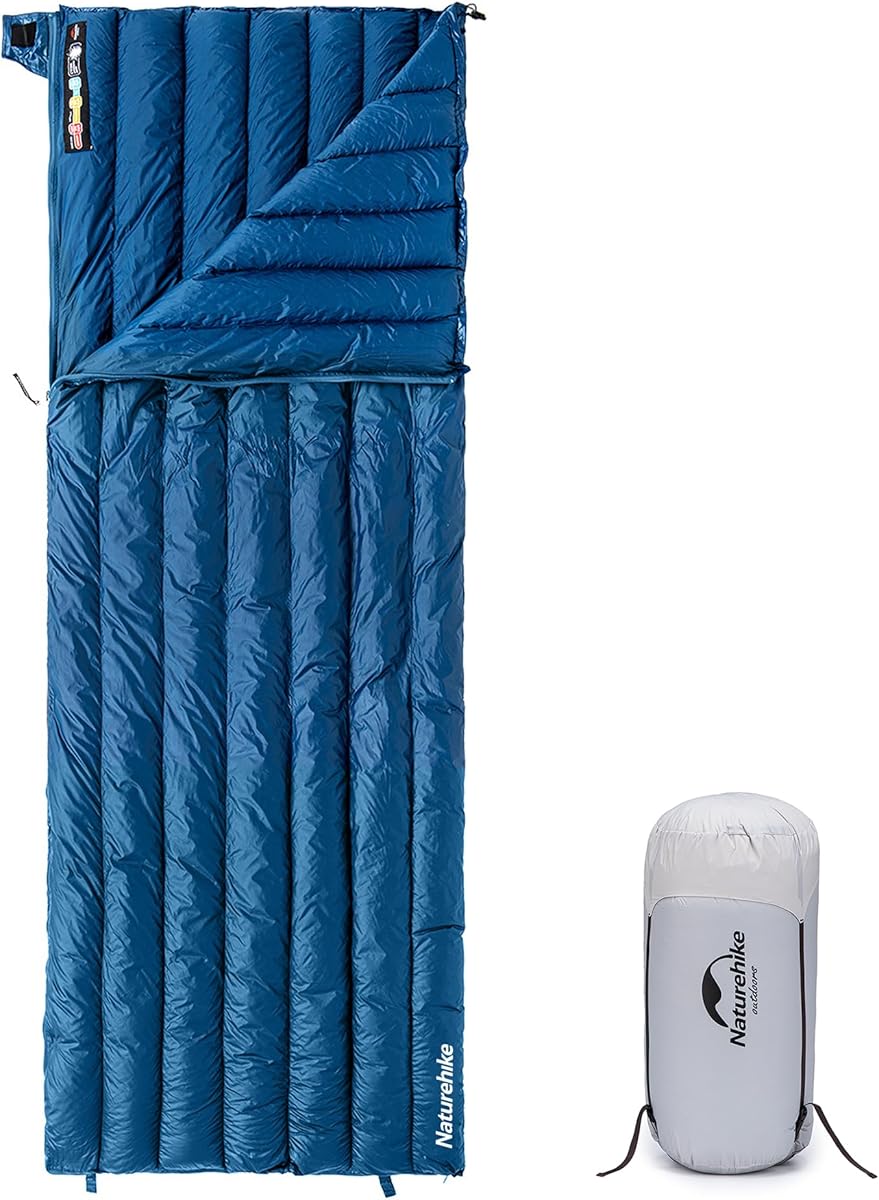
20°F down sleeping bags
Best all-rounderThe single most versatile rating in North America — comfortable spring through fall almost everywhere.

Synthetic 30°F sleeping bags
Best valueDamp-proof, affordable, and forgiving — ideal for humid climates and first-time campers.

Insulated sleeping pads (R-4+)
Most overlookedThe piece that actually keeps you warm from below. R-value 4 covers three seasons.

Double sleeping bags
Best for couplesTwo-person rectangular bags for couples who car camp and hate zipper seams.

Sleeping bag liners
Best upgradeAdds 5–15°F, keeps the bag clean, and doubles as a standalone summer sheet.
Frequently asked questions
What temperature rating should I buy?+
A 20°F bag covers spring through fall across most of the US. Choose a rating at or below the coldest night you realistically expect, then add 10°F of margin if you sleep cold.
Is down or synthetic better?+
Down for weight, packability, and longevity. Synthetic for wet climates, hard use, and budget. Most car campers are better served by synthetic; most backpackers by down.
Why am I cold in a bag rated below the temperature?+
Nine times out of ten it's an underinsulated sleeping pad. The bag's rating assumes an insulated pad beneath you.
Can I wash a down sleeping bag?+
Yes — front-loading machine, down-specific detergent, and a very long tumble dry on low with dryer balls to break up clumps. Expect it to take hours.